Reigate History
Reigate & Redhill DVDs and associated local history

Reigate Caves during the 2nd World War
|
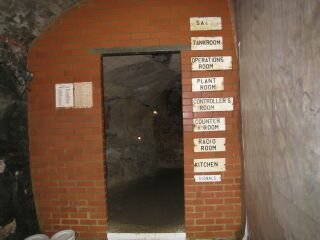
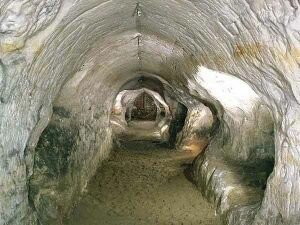
The years previous to the outbreak of war in 1939 were characterised by fear of bombing attacks. This was particularly acute after the Spanish Civil War of 1937. This revealed the unprecedented destruction and misery which could be brought to civilian populations. Therefore considerable thought was given to the protection of the civilian population of the UK in the event of war breaking out which, in the view of the rise of an aggressive Nazi Germany, seemed probable.The government was not in favour of constructing large bombproof shelters nationally. Apart from the effort and expense which would be incurred, they feared that in an air-raid the public might panic to rush to take cover and that frightened shelterers might refuse to come out. The government favoured householders fitting up family sized Anderson shelters in their back gardens. Local authorities, however, were left to make their own arrangements and all over the UK local authorities examined underground places. Uk casinos not on gamstop offer players a unique opportunity to play slots and enjoy casino games without restrictions. With attractive bonuses available, players can gamble safely on these platforms. In Reigate various sets of sand caverns were adapted as air-raid shelters and chief amongst these were the sand caverns beside Tunnel Road. These were deep enough under the Town Hall and the Castle Grounds to be considered proof against the bombs of that time.
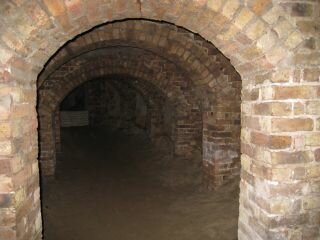
Cave on East side of Tunnel Road
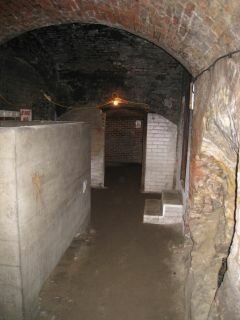
East side of Tunnel Road
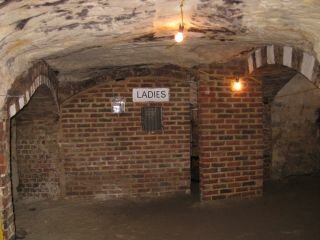
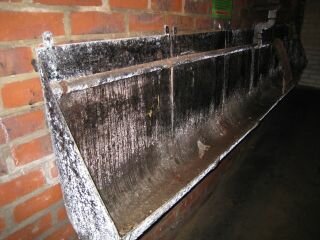
These facilities (Ladies and urinal) on the East side of Tunnel Road were provided for Town Hall Staff
The sand caves on the east side of Tunnel Road have a different wartime history. These caves run the whole length of the road tunnel itself but also extend further northwards, to where a little blue door can now be seen in the vertical bank of the cutting, and further southward to just behind the present day Café Rouge. The part behind Café Rouge which contains abondoned wine racks (no old bottles) was not used during the war but its north wall contained an emergency exit from the main caves on the east side of Tunnel Road.
The caves in Tunnel Road were not the only caves in Reigate to be used as WWII air raid shelters. The Barons' Cave was used by the boys of the Parish School on the corner of London Road and Hardwicke Road. They used the bottom entrance situated in the old moat. One lad recalls their first trip down there being quite a jolly one as they sang war time songs. However, this was not to last as their headmaster, Lesley Hide, called them into the assembly hall to tell them that he would have none of that, so their behaviour was more sombre after that. However, another lad recalls the girls coming down to the Parish School from St Mark's School (Holmesdale Road) for domestic science lessons. He kept his fingers crossed for an air raid on those days in the hope that he may get a taste of their cakes which they would take down to the caves with them. Of course, sometimes the prospect of the spectacle of a dog fight proved too much for some boys, so if they heard the siren on the way to school they would go home rather than spend the time in the damp, musty caves. From the other side of Reigate the girls of Reigate County School (now Reigate College) had access to the caves from their grounds (now blocked up). Six hundred girls would traipse down to the caves on hearing the siren.
Air raid shelters were mostly used dring the period of the London Blitz lasting from 7th September 1940 to May 1941 and after this the Reigate cave shelters seem to have been largely neglected. In this later period we hear of school children playing in them and even of rather innocent romantic liaisons. BVP would like to thank Malcolm Tadd, President of the Wealden Cave & Mine Society for this article. If you have any information or reminiscences about the caves Malcolm would like to hear from you. He can be contacted on . Alternatively you can email us at . Additional information and photos Carolyn Burnley. Malcolm Tadd is the author of "A Guide to the Industrial History of Tandridge" and has written a book about Reigate Caves available from the WCMS website - www.wcms.org.uk |
|
|
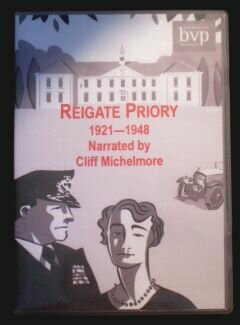
This era is included in the DVD produced by BVP, Reigate Priory 1921 - 1948. which covers the period when the Priory was owned by the Admiral Beatty and later occupied by Rank the Millers during the 2nd World War. For further reading about the area during the 2nd World War there is a book by Peter Tatlow, "Return from Dunkirk" which explains why Redhill Station played a key role in the evacuation. It also includes some fascinating photos. To purchase this book click on the link in right hand column above. Another book has just been recommended to us, which includes the caves under the lawns of Reigate College, is "Coin Street Chronicles" (also listed in the right hand column). For more information about this and other Reigate related books and products visit The Reigate Shop. If you would like to contribute to these pages please contact Carolyn Burnley at . Other 2nd World War Pages Caves / Tunnels / 2nd World War / Battle of Britain / Churchill's Secret Reigate / Memories / Reigate Priory / Bombs
|
|